THE PRIME MINISTER ASSIGNS TASKS TO LEADING ENTERPRISES; CMC CHAIRMAN PROPOSES “UNBLOCKING” DATA AND DATA-CENTER POLICIES
On the morning of 31/1, at the Government Headquarters, Prime Minister Phạm Minh Chính chaired the fourth meeting of the National Steering Committee for implementing Resolution 68 on private-sector economic development. The focal point of the discussion was assigning specific tasks to major enterprises to lead each industry and sector, creating “locomotives” that spread competitiveness across the private sector.
According to the Prime Minister, the key requirement is to translate the spirit of the resolution into measurable outcomes: the business environment must become more open and more equitable; procedures must be reduced in a substantive way; and support mechanisms must target the right “bottlenecks” so enterprises can confidently make long-term investments.

Photo 1: Overview of the National Steering Committee meeting on implementing Resolution 68 on private-sector economic development on 31/1/2026 at the Government Office
At the meeting, CMC Technology Group was the only enterprise from the science & technology/digital technology bloc to deliver a policy presentation. Chairman Nguyễn Trung Chính focused on key policy bottlenecks that directly affect the competitiveness of technology enterprises - from data and data centers to the “pathway out” to international markets.
“Selecting pioneer enterprises” and promoting an AI specialized industry association
At the outset, Mr. Chính recommended establishing an official mechanism to select pioneer enterprises by field groupings, with a scale large enough to create spillover effects. According to him, each group could bring together 10 - 20 leading enterprises to receive missions and commensurate support mechanisms, helping form “locomotives” that lead the way.
Alongside the orientation to promote the semiconductor ecosystem, the CMC Chairman proposed the early formation of the Vietnam Artificial Intelligence Association to consolidate forces, standardize capabilities, accelerate commercialization, and improve the national AI capability ranking.

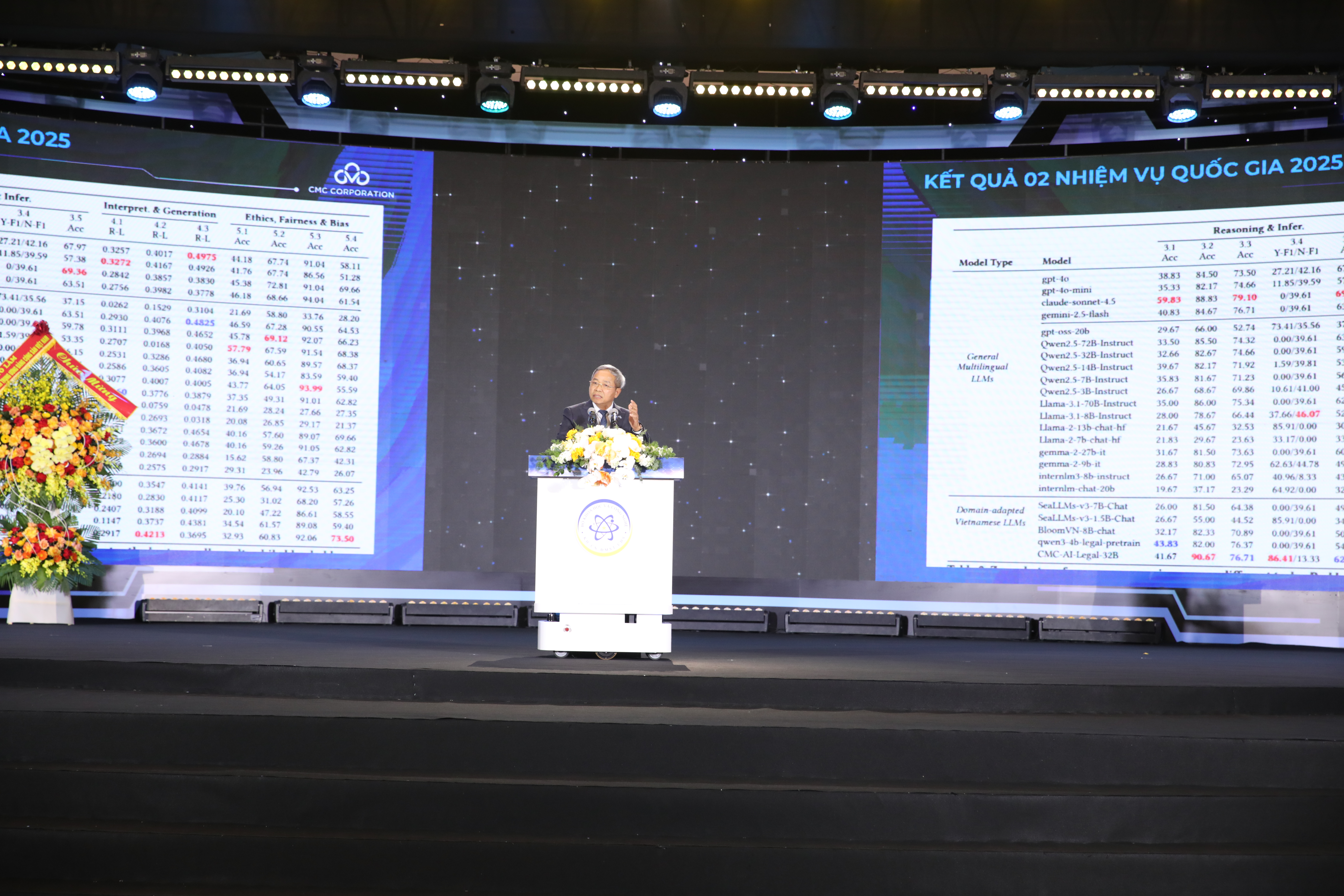
Photo 2: CMC Chairman Nguyễn Trung Chính, representing the science & technology/digital technology bloc, delivers proposals and recommendations to promote the role of the private sector and implement Resolution 68 effectively and substantively
Data policy: not yet attracting major capital flows
One point Mr. Chính emphasized was the data policy framework. According to assessments from international partners, Vietnam’s data policies are currently not competitive compared with Singapore, Malaysia, and Thailand, making some funds and large corporations cautious when deciding to invest.
He recommended that the Government direct the Ministry of Public Security (the data management authority) to review and improve policies toward an approach of “tight control, but predictable,” balancing data sovereignty with interoperability needs, aligning with international practices, and creating a foundation to attract large-scale investments.
Data centers need an appropriate electricity pricing mechanism to compete regionally
For digital infrastructure, the CMC Chairman cited plans to invest in data centers with a total capacity of 120 - 150MW over the next five years, and argued that Vietnam’s competitiveness depends heavily on electricity costs—the largest cost component in the data-center equation.
He expressed concern about the possibility of classifying data-center electricity under commercial service pricing, as this could significantly increase costs and reduce Vietnam’s attractiveness in competing to win large customers from markets such as the U.S., Japan, and South Korea. In his view, data centers should be regarded as foundational infrastructure of the digital economy, requiring a reasonable and stable electricity pricing mechanism so enterprises can finalize long-term contracts.
Economic diplomacy and science & technology diplomacy to open an international “pathway out”
The CMC Chairman also proposed expanding economic diplomacy and science & technology diplomacy programs toward a “market-problem driven” approach, allowing enterprises to participate in building market-entry plans for each country and each industry. According to him, the domestic market is not “wide” enough for technology enterprises to accelerate; to break through, there must be practical support mechanisms for “going out” and signing international contracts.
Concluding his presentation, Mr. Nguyễn Trung Chính reaffirmed his commitment to sustaining over 20% annual business growth for CMC Technology Group to contribute to the state budget; at the same time, he proposed coordinating with the Ministry of Science and Technology to review policies related to digital technology, data, data centers, etc., in order to promptly remove regulations that have not kept pace with real-world developments.
The meeting closed with a consistent requirement from the head of Government: clearly assign tasks to the large-enterprise force to lead industries and sectors; and at the same time, push for implementation mechanisms that are fast and strong enough to turn the resolution into growth and national competitiveness.